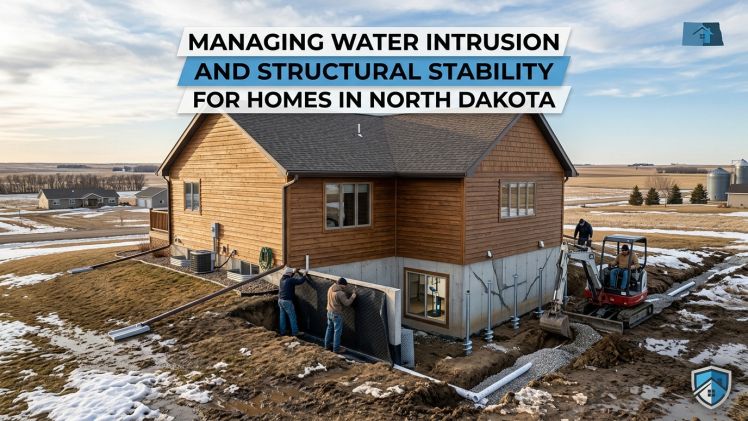
Managing Water Intrusion and Structural Stability for Homes in North Dakota
When the ground begins to thaw or heavy rainfall arrives, homeowners often notice subtle shifts in their living spaces. A damp corner in the lower level, a hairline crack expanding in a wall, or the slight unleveling of a floor can be early indicators that a home’s relationship with the soil surrounding it is changing. For many living in this region, maintaining a dry, stable home is a constant task because the environment naturally places significant pressure on building foundations. Understanding how moisture moves through soil and how the ground beneath a structure behaves is the first step toward preserving the integrity of a home.
The Challenge of Soil Dynamics and Moisture Management
The ground in this area often consists of materials that react visibly to changes in moisture content. When soil becomes saturated, it can expand, creating upward pressure against basement walls and floors. Conversely, during drier spells, that same soil may shrink or settle, potentially leaving gaps beneath a foundation’s perimeter. This cycle of expansion and contraction is a common cause of structural stress.
Moisture infiltration is rarely the result of a single flaw. It is typically a process of water finding the path of least resistance. In many cases, water accumulates near the foundation because of how the exterior grading is shaped or how gutters direct roof runoff. If water is allowed to pool against the foundation walls, it exerts hydrostatic pressure—the weight of the water pushing against the concrete. Over time, this pressure can exploit small voids or porous areas in the masonry, leading to leaks, efflorescence, or even bowing walls. Addressing this challenge requires looking at both the water’s source and the resistance of the barrier it is trying to penetrate.
How Modern Approaches to Stabilization Typically Work
When signs of water intrusion or movement appear, the goal is to decouple the structure from the volatile soil conditions. Effective basement waterproofing in North Dakota often involves a two-pronged strategy: managing the water before it reaches the wall and creating a reliable drainage path if it does.
External and Internal Water Management
The first line of defense is often external. This includes ensuring that the grade of the yard slopes away from the home so that precipitation flows toward natural drainage areas rather than against the foundation. When exterior drainage is insufficient, interior systems are often utilized. This process typically involves creating a perimeter channel along the base of the foundation floor, which directs water into a sump pump system. This method is generally considered effective because it relieves the hydrostatic pressure that would otherwise force moisture through the walls or floor.
Structural Reinforcement Techniques
If a foundation shows signs of leaning or cracking, the solution often requires reinforcing the structure itself. This might involve applying carbon fiber strips or installing steel beams to stabilize walls against soil pressure. These materials are designed to add tensile strength to the concrete, preventing further bowing. For foundations that have settled unevenly, specialists often look toward methods that transfer the weight of the home to more stable, deeper soil layers. This approach is intended to lock the structure in place, regardless of how the topsoil moves in response to seasonal changes.
Factors That Shape the Longevity of a Foundation
Several key factors determine whether a foundation will remain stable over the long term. The first is the quality of the original drainage design. A home with properly functioning gutters, downspout extensions, and consistent perimeter drainage is significantly less likely to face severe water-related issues than one where these elements are neglected.
The type of foundation material also plays a role. Concrete is durable, but it remains a porous material at a microscopic level. How that concrete was reinforced and how it has aged will influence its susceptibility to cracking. Additionally, the surrounding landscaping impacts the foundation. Large trees planted near the home can alter moisture levels in the soil as their root systems grow and consume water, potentially creating localized zones of expansion or contraction that stress the foundation walls. Residents who pay attention to these environmental variables and perform routine maintenance on their drainage systems often find that they can prevent small issues from turning into major structural concerns.
Practical Steps for Maintaining a Stable Home
Approaching foundation health well is less about reacting to emergencies and more about consistent observation. A practical way to start is by performing a seasonal walk-around. During the spring thaw, observe where water pools around the perimeter. If water sits within several feet of the foundation, the grading likely needs adjustment. Ensure that all downspouts are extended far enough to discharge water well away from the house.
If you suspect that your home’s foundation is experiencing movement or recurring water issues, the most productive path is to consult with professionals who specialize in concrete lifting in North Dakota and water management. When you speak with a provider, consider asking:
- What signs of movement or water intrusion should I monitor for in the future?
- How does the proposed solution account for the specific soil characteristics in this region?
- What maintenance is required to ensure the system continues to function effectively over several years?
- Are there observable signs, such as door frame misalignment or sticking windows, that suggest the foundation is under significant stress?
By focusing on these questions, you can gather the information necessary to make informed decisions about your home.
The goal for any homeowner is to establish a barrier that respects the realities of the local climate. Whether the solution involves adjusting the exterior environment, upgrading the interior drainage, or addressing the structural support of the foundation itself, taking action early is almost always the most effective strategy. A home’s foundation is a system that responds to its environment; by controlling the conditions around that system, homeowners can maintain a more stable and dry living environment for years to come. Checking your home’s condition annually is a simple but meaningful step in protecting the long-term value of your property.