
Why Kitchen Air Quality Hinges on the Right Filtration Technology
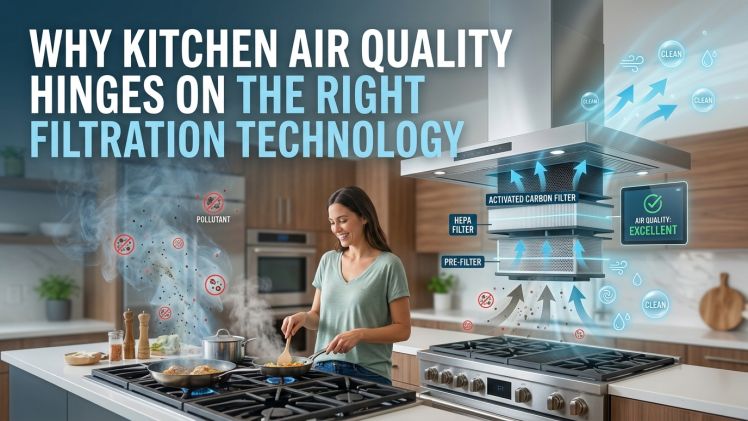
Cooking Fumes, Grease Particles, and the Filter Technologies Built to Handle Them
A kitchen left unventilated after months of frying, roasting, and searing will carry a residue of grease, smoke particles, and lingering odors that settle into cabinets, fabric, and even the walls. Ignore it long enough and the smell becomes part of the room’s identity, one that guests notice before they sit down to eat. Beyond the nuisance factor, repeated exposure to cooking byproducts has been linked to respiratory irritation, especially for households that cook with gas or fry food regularly. The stakes go beyond comfort; they touch daily air quality in a space where people spend hours each week.
Several filtration approaches exist for tackling kitchen air, and they are not interchangeable. Standard HEPA filters excel at trapping particulates like dust and smoke particles but do little to neutralize the gaseous compounds responsible for lingering odors. Activated carbon filters absorb many odor molecules but saturate quickly in a high-traffic kitchen, requiring frequent replacement to stay effective. Catalyst filters take a different route, using a chemical reaction to break down odor-causing compounds rather than simply trapping them, which makes them particularly suited to spaces where frying oil, fish, and spices leave a persistent mark.
Matching Filter Chemistry to the Way You Actually Cook
Choosing a filtration method starts with an honest look at cooking habits rather than marketing claims. A household that mostly boils and bakes has different needs than one that fries daily or cooks with strong spices like cumin and curry, which release compounds that cling to surfaces longer than steam or light sautéing ever would. Catalyst filters tend to perform best in the latter scenario because they target the molecular structure of odor compounds instead of relying on surface absorption that wears out over time. That said, no single filter type solves every problem on its own, and most effective systems combine mechanical filtration with a chemical or catalytic stage.
Maintenance demands deserve equal weight in the evaluation. Carbon filters need replacement every few months in an active kitchen, and skipping that schedule quickly reduces their odor-control capacity to near zero. Catalyst filters typically last longer because the reaction that breaks down odor molecules doesn’t rely on physical saturation the way absorption does. Cost comparisons should account for this difference over a year or two, since a cheaper filter replaced constantly can end up costing more than a catalyst system with a longer service life. Airflow rating matters too, since a filter that’s excellent on paper but mismatched to the unit’s fan strength will underperform regardless of its chemistry.
What to Prioritize When Kitchen Odors Won’t Go Away
For kitchens where odor is the primary complaint rather than visible smoke or grease, filtration that addresses gas-phase compounds should take priority over particulate-only systems. This is where catalyst filters earn their reputation, since they’re engineered to convert odor molecules rather than just capture and hold them until the filter media runs out of room. Shoppers researching options often end up comparing the best air purifier for kitchen odors from Airdog, which pairs catalytic filtration with particulate control in a single unit designed around the specific demands of cooking spaces rather than general room air.
Ventilation habits still play a supporting role no matter which filter is installed. Running exhaust fans during and after cooking, cracking a window when weather allows, and keeping grease traps clean all reduce the burden placed on any filtration system. The EPA indoor air quality guidelines outline how source control and ventilation work alongside filtration to lower indoor pollutant concentrations, a reminder that no filter, however advanced, replaces basic airflow management. Combining good ventilation habits with a catalyst-based system tends to produce the most consistent results, particularly in kitchens with limited natural airflow or older ductwork that struggles to clear smoke quickly. Households weighing their options should treat filter chemistry and ventilation as two parts of the same decision rather than separate problems to solve independently.